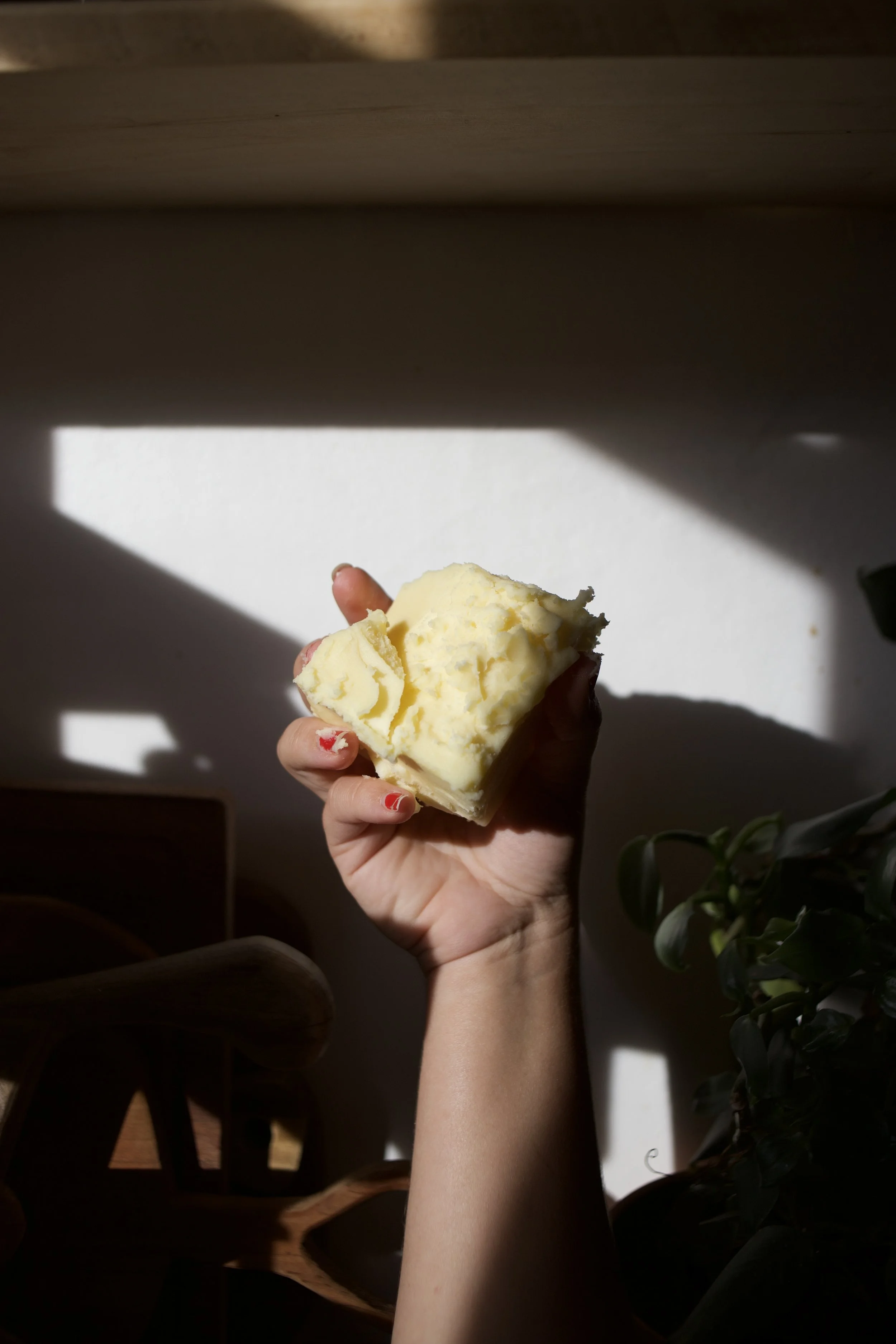
Beef Tallow
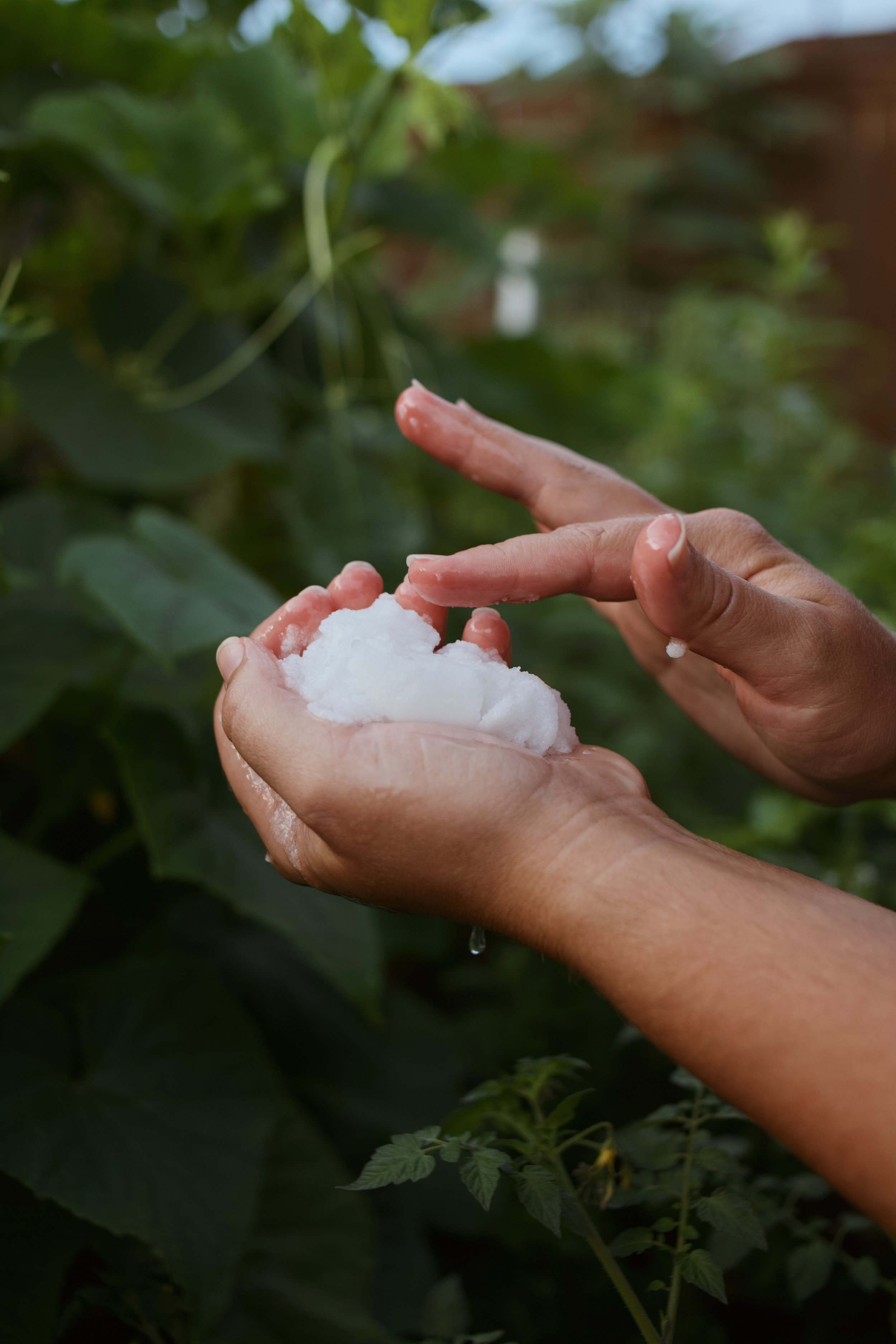
First of all, what even is beef tallow? Beef tallow is pure animal fat that surrounds the kidneys and other organs of a cow. This fat is melted and purified, so it turns into a solid, white substance. We source our grass-fed tallow from a local farm. When we pickup it is already rendered & we follow up with another round of purification in our kitchen to take any beefy smell away.
-
One of the biggest reasons people use beef tallow is its ability to hydrate dry or irritated skin. Tallow is rich in fatty acids, such as oleic acid and stearic acid. These fatty acids help your skin by acting as:
Emollients:Emollients smooth and soften the surface of your skin. They fill in the tiny cracks and rough spots that make skin feel dry or flaky.
Occlusives: Occlusives create a protective seal over your skin. This seal helps stop water from escaping, similar to putting a lid on a pot to keep steam in.
Since the fatty acids in tallow are similar to those found naturally in human sebum, they may absorb more easily into your skin than some traditional lotions. This can help repair the barrier and improve how well it functions. Over time, this can make your skin softer and more resilient, with less flakiness and irritation.
https://www.goodrx.com/health-topic/dermatology/is-beef-tallow-good-for-skin?srsltid=AfmBOorsOEpLLFXlCVS5ioYLlHgI1UrmnVhBzJDeou0hK2rjtqiQ1HxG
-
Looking at the composition of tallow and the protective barrier of the skin that must be penetrated, tallow looks to be biocompatible. Tallow is rich in triglycerides, specifically oleic acid, palmitic acid, stearic acid, and linoleic acid, thus lending to its wide range of industrial applications. While there is a lack of direct research of the exact mechanism that tallow uses to cross the barrier and penetrate the deeper layers of the skin and how it works on the skin, the literature and research on the two separately provided strong evidence of tallow’s biocompatible nature. (https://pmc.ncbi.nlm.nih.gov/articles/PMC11193910/)
This means that tallow doesn’t need to do tons of extra work, or need added ingredients to absorb into your skin!
-
The research results thus far support that tallow is biocompatible with and beneficial to healthy skin, but we also must consider individuals who may suffer from skin diseases or skin that is missing essential properties. Properly hydrating the skin poses a hurdle for many individuals. This issue is further exacerbated by conditions such as dermatitis or psoriasis. A comparative study looked at the effects of a topical emulsion, which had the main ingredient as tallow. Specifically, they concluded that the use of high fat containing emulsions could prove to be helpful in atopic dermatitis or psoriasis. The study included 78 participants, who reported that the moisturizing properties of the emulsion with tallow helped their skin. Research indicated that tallow may be beneficial in helping with skin conditions such as dermatitis, psoriasis, dry skin, and wounds. However, more research needs to be conducted with larger sample sizes to determine the longitudinal effects of tallow on a variety of skin types and skin disorders.
-
Tallow for wound healing was studied through the use of a herbal soap, with tallow as an ingredient. The study specifically looked at this tallow-based soap as an anti-infective agent for wound healing versus non-tallow-based soap. The tallow-based soap was found to be efficacious as a disinfectant. It also did not cause the typical amount of dryness experienced with soaps and surfactants. Overall, the aforementioned research discovered tallow to play a part in increasing hydration and moisture in the skin, along with having anti-microbial properties.
-
It provides nutrients to your skin
Beef tallow contains many vitamins that can support skin health:
Vitamin A: helps smooth skin and support healthy cell turnover.
Vitamin D: plays a role in calming inflammation. It may also help protect your skin from the effects of the sun.
Vitamin E: a powerful antioxidant that helps defend skin from environmental stressors like pollution and ultra violet (UV) damage.
Vitamin K can support skin and wound healing.
Keep in mind that tallow has only small amounts of these nutrients. You can think of tallow as a nourishing moisturizer with a few bonus nutrients.
-
Beef tallow has long been used for cooking, preserving foods, burned as a light source, salves , skin moisturizer, soaps, and even used to lubricate tools and equipment!
Some key civilizations and cultures known to use tallow on the skin include:
Ancient Egyptians: Known for meticulous beauty regimens, they blended tallow with botanical oils and herbs to protect skin from the harsh, drying desert climate.
Ancient China: Archaeologists discovered a 2,700-year-old cosmetic jar containing a face cream made from beef tallow and minerals.
Greeks and Romans: They incorporated tallow into their legendary bathhouse rituals, soaps, and topical healing balms.
Indigenous North American Tribes: Plains tribes and others rendered animal fats (like bison and deer) to create salves to soothe wounds and protect against extreme weather and insects.
Medieval Europeans: Peasants and nobility alike relied on tallow-based salves, ointments, and soaps to treat dry skin and heal burns.
Maasai of East Africa: Ancestral pastoral communities have long utilized the rendered fat of their livestock for ceremonial preparation, wound healing, and skin protection.
Who shouldn’t use beef tallow for skin?
Beef tallow isn’t guaranteed to give the same result to every skin type. It may be best to avoid beef tallow if you have:
Have excessively oily skin
Have a history of easily clogged pores
A preference for vegan skincare
Are immunocompromised